Spec Battle: Thermal Master P3 Thermal Camera vs Papier Photo Book — Is It Worth Upgrading?
In the rapidly evolving landscape of consumer technology and lifestyle products, buyers often find themselves at a crossroads between functional utility and sentimental preservation. On one hand, tools like the Thermal Master P3 Thermal Camera represent the cutting edge of invisible detection, allowing homeowners, DIY enthusiasts, and professionals to see the world through a heat-sensitive lens. On the other hand, the Papier Photo Book represents the pinnacle of tactile memory, turning digital captures into a high-quality physical archive. While these two products exist in seemingly disparate categories—thermal imaging and premium stationery—they both address a fundamental human desire: the need to capture and interpret our surroundings with greater clarity and permanence.
The "upgrade" in this context isn't necessarily a jump from one version of a sensor to another, but rather an upgrade in how a consumer chooses to spend their resources to improve their environment or record their history. This article provides an extensive analysis of the technical specifications, real-world applications, and value propositions of both the Thermal Master P3 and Papier Photo Books to help you decide which investment serves your current lifestyle needs.
Thermal Master P3 Thermal Camera: The Practical Powerhouse
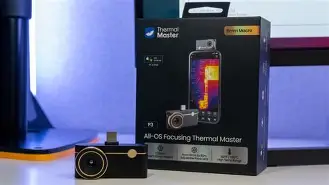
The Thermal Master P3 is a specialized imaging peripheral designed to turn a standard smartphone or tablet into a high-resolution thermal scanning device. In an era where energy efficiency and home maintenance costs are skyrocketing, the P3 offers a level of insight that was previously reserved for industrial contractors. It operates on the principle of detecting infrared radiation, which every object emits based on its temperature, and translating that data into a visual map known as a thermogram.
Under the hood, the P3 is powered by an uncooled microbolometer sensor that provides impressive resolution for its compact form factor. While many entry-level thermal cameras offer grainy 80x60 or 120x90 resolutions, the P3 pushes into a territory that allows for crisp identification of specific components, such as individual wires in a circuit breaker or specific wet spots in a drywall ceiling. This clarity is essential because thermal imaging is only as useful as its ability to pinpoint the exact location of a thermal anomaly.
One of the most praised features of the P3 is its plug-and-play capability. It typically utilizes a USB-C or Lightning connection, drawing minimal power from the host device while leveraging the phone’s high-resolution display and processing power to render smooth, real-time thermal video. The accompanying software suite usually includes several color palettes—such as Iron, Rainbow, and White Hot—allowing users to optimize the visual contrast based on the specific temperatures they are tracking.
Real-World Use Cases for the Thermal Master P3
The utility of the Thermal Master P3 extends far beyond mere novelty. For the homeowner, it is a diagnostic tool that pays for itself over time. During the winter months, the P3 can be used to scan window frames and door seals for air leaks. Identifying a single drafty area and sealing it can significantly reduce monthly heating bills. Furthermore, it is an invaluable tool for detecting hidden pipe leaks behind walls or insulation gaps in attics that are otherwise invisible to the naked eye.
For the hobby builders and electronics enthusiasts, the P3 is a companion for troubleshooting circuit boards. High heat signatures on a PCB can indicate a failing capacitor, a short circuit, or an overloaded processor. By visualizing heat dissipation, creators can design better cooling solutions for their custom rigs. Even in outdoor settings, hunters or wildlife observers use thermal imaging to track heat signatures in low-light conditions, providing a "predator vision" experience that enhances situational awareness.
Papier Photo Book: Elevating the Digital Archive
If the Thermal Master P3 is about seeing what the eyes cannot, the Papier Photo Book is about feeling what the heart remembers. In a world where we take thousands of photos on our phones only for them to sit ignored in cloud storage, Papier offers a curated, physical manifestation of those moments. The "upgrade" here is from the fleeting digital screen to the permanent, archival-quality printed page.
Find top-rated Cameras & Photography products at great prices.
See Deals →Papier has distinguished itself in the stationery market by focusing on design-led templates and superior paper stock. Their photo books are categorized by their tactile quality, often featuring hardback covers with textured finishes and thick, Mohawk Superfine paper or high-gloss alternatives. Unlike the "flat" printing found in cheaper grocery store photo centers, Papier uses advanced digital presses that ensure color accuracy and deep blacks, capturing the nuances of a sunset or the subtle tones of a portrait.
The customization experience is a significant part of the Papier appeal. Their editor allows users to choose from minimalist layouts that let the photos speak for themselves or more decorative, illustrative themes created by independent artists. This makes the Papier Photo Book less of a generic album and more of a bespoke coffee table book that reflects the owner's aesthetic taste.
Why Buyers Choose the Papier Experience
Buyers typically invest in a Papier Photo Book for milestone events: weddings, the first year of a child's life, or a once-in-a-lifetime travel expedition. The value lies in the curation process. Selecting the best 50 photos from a collection of 5,000 forces a narrative and a reflection that digital scrolling cannot replicate. Furthermore, the longevity of physical media is a major factor. While hard drives can fail and cloud subscriptions can expire, a well-bound book on a shelf remains accessible for generations without the need for a charger or a software update.
Direct Comparison: Technical Specs and Lifestyle Value
Comparing these two is a study in "hard tech" versus "soft tech." The following table outlines how these two products stack up in terms of what they offer the modern consumer who is looking to upgrade their toolkit or their home library.
| Feature/Criteria | Thermal Master P3 | Papier Photo Book |
|---|---|---|
| Primary Function | Detecting heat and sub-surface anomalies | Preserving and displaying visual memories |
| Input Required | Smartphone/Tablet + App | Digital Photos + Design Selection |
| Resolution/Quality | High-res thermal sensor (e.g., 256x192) | High-DPI professional digital printing |
| Durability | Rugged, electronic hardware | Archival paper, cloth or hardback covers |
| Frequency of Use | Occasional (maintenance/projects) | Continuous (display/keepsake) |
| Upgrade Motivation | Improving home efficiency and safety | Moving from digital clutter to physical art |
Pros and Cons Analysis
Thermal Master P3 Thermal Camera
- Pro: Immediate Problem Solving. It identifies exact points of heat loss or electrical stress, potentially saving thousands in repair costs.
- Pro: Portability. The small form factor means it can live in a pocket or a small tool bag, ready for any spontaneous inspection.
- Pro: Educational Value. It offers a fascinating way to teach children or students about physics, heat transfer, and infrared light.
- Con: Dependence on Hardware. If you upgrade your phone to a device with a different port or incompatible software, the camera may become a paperweight.
- Con: Niche Application. Unless you are an active DIYer or professional, it may spend a lot of time in a drawer between uses.
Papier Photo Book
- Pro: Tactile Satisfaction. There is a measurable psychological benefit to holding physical memories and sharing them with others in person.
- Pro: High Design Standard. The collaborations with artists ensure that the book looks like a piece of decor rather than just a photo album.
- Pro: Future-Proofing. Physical books do not require "firmware updates" to be enjoyed 50 years from now.
- Con: Time Investment. Designing a truly beautiful book takes hours of curation, cropping, and layout mapping.
- Con: Fixed Content. Unlike a digital gallery, once it is printed, you cannot add more photos or fix a typo without buying a new book.
Buying Guide: Which One is Your Next "Step Up"?
Deciding between these two products depends entirely on which area of your life currently feels "under-upgraded." To help refine your choice, consider the following personas and whether you identify with their current needs.

The Efficiency Seeker
If you are a homeowner who feels that your utility bills are higher than they should be, or if you constantly worry about the "unseen" elements of your property—like the health of your HVAC system or the integrity of your electrical panels—the Thermal Master P3 is the clear winner. It is a proactive investment in your property's longevity. Buyers who value "peace of mind" and data-driven home maintenance should prioritize the thermal camera. It is an upgrade of your capabilities.
The Memory Archivist
If your phone is currently warning you that your cloud storage is full, and you realize you haven't looked at your vacation photos since the day you returned, the Papier Photo Book is the necessary upgrade. It is an investment in your legacy and your mental well-being. By turning those digital pixels into a book, you create a physical anchor for your experiences. This is the choice for those who value family history, interior design, and the slow, deliberate enjoyment of media.
The Gift Giver
When looking for a high-impact gift, the choice is equally split. The Thermal Master P3 is an incredible "gadget" gift for the person who "has everything" and enjoys high-tech toys. It is impressive, functional, and inherently cool. Conversely, a pre-designed Papier Photo Book is perhaps the most meaningful emotional gift one can give, perfect for anniversaries or major birthdays. It shows a significant investment of time and thought.
Find top-rated Cameras & Photography products at great prices.
View Offers →Technical Deep Dive: Understanding Thermal Sensitivity vs. Print Gamut
When we talk about "specs" in the camera world, we usually talk about megapixels. However, for these two products, the specs that matter are quite different. For the Thermal Master P3, the key spec is NETD (Noise Equivalent Temperature Difference). This measures the camera’s sensitivity—specifically, the smallest temperature difference it can detect. A lower milliKelvin (mK) rating means the camera can see subtle heat patterns, like the studs behind a wall or a very slow water leak. The P3 typically excels here, offering sensitivity that brings professional-grade diagnostics to a consumer price point.
For the Papier Photo Book, the "spec" to watch is the Color Gamut and Paper Weight (GSM). Papier uses high-grade digital printing that utilizes a wider color range than standard home printers. This is why skin tones look natural rather than orange, and why deep blue skies don't have the "banding" often seen in low-quality prints. The 150-200 GSM paper ensures that the pages have a "heft" to them, preventing ink bleed-through and providing that luxurious feel that justifies the upgrade from a standard photo print.
The Verdict: Is It Worth Upgrading?
In the final analysis, whether it is "worth it" to upgrade comes down to the return on investment (ROI) you expect. The Thermal Master P3 offers a Financial ROI. By identifying a single failed insulation patch or a leaking pipe before it causes catastrophic damage, the camera can save you hundreds, if not thousands, of dollars. It is a tool for the rational, prepared individual who wants to master their environment through technology.
The Papier Photo Book offers an Emotional ROI. It provides a sense of completion and satisfaction that digital files cannot match. In an increasingly ephemeral world where everything is "on-demand" and "in the cloud," the permanence of a Papier book is a grounding force. It turns the chaos of your camera roll into the story of your life.
Ultimately, these products represent two different ways to use "camera" technology to improve your life. One allows you to see the hidden problems of the present, while the other allows you to preserve the beautiful moments of the past. If your home feels like a mystery of cold drafts and mysterious sounds, go with the Thermal Master P3. If your life feels like a blur of digital screens and forgotten milestones, the Papier Photo Book is the upgrade you’ve been waiting for.
Both products are leaders in their respective fields, demonstrating that whether you are looking through a thermal sensor or at a printed page, the right equipment changes how you perceive your world. There is no wrong choice, only the choice that best fits the "view" you want to have today.