Spec Battle: Identityforce vs Epomaker Luma84 — Is It Worth Upgrading?
Category: Laptops
Introduction
When thinking about upgrades in a modern laptop-centric workflow, buyers often face two different kinds of decisions: upgrade the laptop itself for better performance, display, and battery life, or invest in peripherals that improve the day-to-day experience — most notably the keyboard. This article compares two products that sit on opposite ends of that spectrum: the Identityforce (a compact productivity laptop) and the Epomaker Luma84 (an 84‑key mechanical keyboard). Instead of treating this as a direct like-for-like hardware duel, the aim is to help readers understand real-world trade-offs and whether spending on a new laptop or a premium external keyboard is the smarter move given typical user needs.
How to read this comparison
The review covers each product in detail, highlights strengths and weaknesses with pros and cons, and includes a side-by-side comparison table that maps practical considerations (portability, typing experience, expandability, and value). A buying guide follows to help identify which upgrade makes the most sense for common buyer profiles: remote workers, developers, writers, students, and light gamers.
Identityforce — Detailed product analysis
The Identityforce represents the modern compact laptop class focused on productivity and portability. It’s aimed at users who need a machine that covers everyday tasks — document editing, web browsing, light photo editing, video calls, and some occasional heavier workloads — while remaining light enough for daily commuting and travel.
Design and build
Identityforce emphasizes thin-and-light construction. Aluminum or alloy chassis, tapered profiles, and narrow bezels give it a premium look and good durability for a daily carry device. Port selection tends to be balanced: at minimum, a USB-C charging/data port, one or two USB-A ports, HDMI or mini‑DisplayPort on some SKUs, and a 3.5 mm audio jack — enough for most mobile workflows without dongles becoming a frequent annoyance.
Performance and configuration
Configurations typically span energy-efficient mobile processors from both Intel and AMD, paired with 8–32 GB of RAM options and solid-state storage. For users who prioritize responsiveness, choosing an SSD and 16 GB of RAM will deliver a noticeable uplift over older machines. Identityforce aims to balance battery life and sustained performance; it usually favors modern power-management over outright peak performance seen in heavyweight gaming laptops.
Display and multimedia
Expect a 13–15 inch IPS or OLED option depending on the trim. High color accuracy and a matte finish on productivity models make the laptop suitable for content creators who need reliable color reproduction on the go. Integrated speakers are serviceable for video calls but are not a replacement for desktop setups or headphones when good sound matters.
Keyboard, trackpad, and daily usage
The identity of the Identityforce’s onboard keyboard is typically a low‑travel, laptop-style chiclet design tuned for quiet typing and compactness. Trackpads are large and precise with multi-touch support. For many users, the built-in keyboard is perfectly adequate, but those who type for long hours may consider external keyboards for ergonomics and feel.
Battery and thermals
The laptop weighs convenience heavily: moderate battery capacity tuned to real-world usage rather than benchmark-busting runtimes. In practice, users can expect a full workday with light-to-moderate workloads. Thermal designs on thin laptops prioritize silence and comfort over sustained heavy CPU/GPU loads.
Find top-rated Laptops & Computers products at great prices.
See Deals →Epomaker Luma84 — Detailed product analysis
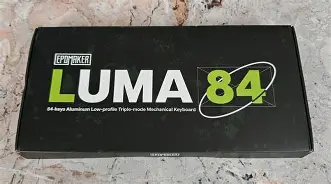
The Epomaker Luma84 is an 84-key compact mechanical keyboard designed for users who want a premium typing experience without occupying the full footprint of a 100% layout. It appeals to writers, coders, and enthusiasts who value typing feel, customization, and a compact desk presence.
Build and layout
The Luma84 typically uses a gasket or gasket-adjacent mounting style which softens keypress feel and reduces noise compared with tray-mounted boards. Its 84-key layout includes navigation keys and arrow clusters while trimming some of the extra whitespace found on full-size boards — a good compromise between compactness and functionality.
Switches and keycaps
One of the Luma84’s main selling points is switch flexibility. Many variants are hot‑swappable, allowing users to choose linear, tactile, or clicky switches and swap them without soldering. Keycaps are often made of PBT for durability and texture, and legends are stable over time. The tactile feedback and satisfying acoustics make it a favorite among touch typists and professional typists.
Connectivity and battery
The Luma84 usually supports wired USB-C and multiple wireless modes (Bluetooth and sometimes 2.4 GHz dongle) which helps it bridge laptop and desktop use. Battery life tends to be excellent in Bluetooth mode, though RGB lighting (if enabled) shortens runtime. Multi-host pairing is often supported, enabling seamless switching between a laptop and a phone or tablet.
Customization and software
Epomaker boards commonly ship with on-board macro layers and companion software for key remapping and lighting customization. Enthusiasts appreciate the ability to program layers, change actuation points on select switches (depending on switch), and remap keys for application-specific workflows.
Pros & Cons
Identityforce
- Pros: Portable and well-balanced for everyday productivity; long battery life for its class; integrated display and webcam for travel; all-in-one solution — no external peripherals required for basic work.
- Cons: Laptop keyboards remain a compromise in typing feel compared with mechanical options; limited thermal headroom for sustained high-performance tasks; repairability and upgrade options are often constrained in thin designs.
Epomaker Luma84
- Pros: Great typing feel with gasket-style mounting, hot‑swappability, and compact layout; versatile connectivity (USB-C and wireless); durable PBT keycaps and strong customization options; significantly improves typing comfort and speed for heavy typists.
- Cons: External keyboard adds bulk to a travel setup; battery and wireless performance can vary by firmware and usage; not a substitute for a laptop upgrade when CPU/GPU limitations are the core issue.
Comparison Table
| Category | Identityforce (Laptop) | Epomaker Luma84 (Keyboard) |
|---|---|---|
| Device type | All-in-one portable computer | External mechanical input device |
| Primary purpose | Compute, display, battery, webcam for mobile work | Typing comfort, accuracy, customization |
| Portability | Designed for daily carry | Portable but adds an extra item to carry |
| Typing experience | Typical laptop chiclet keyboard | Superior mechanical feel and acoustics |
| Customization | Limited (OS-level and accessories) | Extensive (switches, keycaps, layers) |
| Upgrade impact | Improves system-wide performance | Improves comfort/productivity for typing-heavy tasks |
| Value for money | Higher upfront cost but broad impact | Lower cost with high ROI for typists |
| Best for | Users needing more performance, battery, or a better screen | Writers, coders, and anyone who types for long periods |
Real-world use cases and what buyers typically care about
Buyers evaluate upgrades through the lens of everyday workflows. Here are common profiles and how each product addresses those needs:
Remote worker / hybrid employee
For someone who moves between home and office and needs a single machine that performs reliably in meetings, document collaboration, and occasional light media tasks, the Identityforce laptop is the primary upgrade. The built-in webcam, better battery, and display improvements make video meetings and prolonged focus sessions more pleasant. However, if that worker does lots of typing and spends long stretches drafting documents, adding the Luma84 to a home desk setup considerably improves ergonomic comfort and reduces fatigue.
Software developer
Developers benefit from both kinds of upgrades differently. Faster compile times, more RAM for local container workloads, and a high‑refresh external monitor are reasons to upgrade the laptop. Meanwhile, typing precision, key travel, programmable macros, and a compact layout that leaves room for a mouse are reasons to add the Luma84. Many developers split the difference: a capable laptop for mobility and a mechanical keyboard for the home office.
Find top-rated Laptops & Computers products at great prices.
Shop Amazon →Writer / journalist
Writers care most about typing feel, ergonomics, and distraction-free environments. If the current laptop is adequate for text editing, investing in an external keyboard like the Luma84 delivers the most apparent improvement in day-to-day output. If the existing laptop is also old or struggles with basic tasks (slow boot, laggy apps), a new laptop may be the priority.
Student
Students need a balance: portability for campus, long battery life for classes, and a comfortable keyboard for note-taking. Here a light Identityforce may be the more practical single investment. An external keyboard is valuable but less practical for students who constantly change study locations.
Light gamer / media consumer
Gamers who play casually may appreciate mechanical switches but often prioritize GPU and display refresh. The Luma84 is great for tactile feedback in certain titles, but gamers who require high refresh and dedicated GPUs will benefit more from a laptop that addresses those performance characteristics.
Buying guide — how to choose
Consider the following checklist before deciding which upgrade makes the most sense.
1. Identify the pain point
- If the system is slow, apps are lagging, or battery life prevents a full day of work, prioritize a laptop upgrade.
- If typing fatigue, accuracy, or desk ergonomics are problems, consider the Epomaker Luma84.
2. Evaluate portability needs
- Frequent travelers: a lighter, more efficient laptop is more valuable than a bulky desk accessory.
- Mostly stationary setups: an external keyboard provides sustained benefits at a lower cost.
3. Consider total cost of ownership
- Laptops represent a bigger upfront investment but affect every task — display, webcam, battery, CPU/GPU.
- Keyboards are cheaper and can be used with multiple devices, offering excellent value for typists.
4. Think about ergonomics and workflow
- For long typing sessions, ergonomic gains from a mechanical keyboard often translate into measurable comfort improvements and fewer breaks for wrist/hand strain.
- When mobility is non-negotiable, a laptop with a good keyboard and hinge design may be preferable to carrying extra peripherals.
5. Look for compatibility and expandability
- For keyboards: ensure wireless modes and multi-host pairing are compatible with the laptop and devices in use.
- For laptops: check RAM and storage upgradeability if future-proofing is a priority.
6. Try before you buy if possible
- Keyboard feel is subjective. If a local retailer or coworking space has mechanical keyboards to test, that can prevent buyer’s remorse.
- For laptops, confirm screen quality (brightness and color), keyboard travel, and port layout match daily needs.
Practical purchase scenarios
To make the guidance actionable, here are three concrete recommendations based on typical situations.
- Case A — The commuter with an outdated laptop: Replace the laptop. Improved battery life and faster responsiveness will have immediate impact on every task.
- Case B — The home-based writer on a capable but aging laptop: Buy the Epomaker Luma84. The typing experience jump will likely be more meaningful than a modest laptop refresh.
- Case C — The developer who splits time between home and office and wants the best of both worlds: Consider a moderately powerful new laptop for mobility and pair it with a Luma84 for the home desk. This combination maximizes productivity across environments.
Conclusion
Identityforce and the Epomaker Luma84 solve different problems. Identityforce is a holistic upgrade that improves compute, display, and mobility. The Epomaker Luma84 is a targeted upgrade that transforms the typing experience and desk ergonomics. For most buyers, the correct choice depends on the primary bottleneck in daily work: if it is performance, display quality, or battery life, upgrading the laptop is the clear path. If the primary concern is comfort, typing speed, or desk productivity, then the Luma84 is a high‑value, lower-cost investment.
Ultimately, many productive setups benefit from both: a reliable portable laptop for on-the-go work and a thoughtfully chosen mechanical keyboard for the home desk. That combination yields the best of both worlds — mobility without sacrificing the long-term ergonomics and satisfaction that a premium keyboard brings to everyday typing tasks.