Don't Buy the Peckperk Smart Bird Feeder Camera Until You Read This Full Analysis
The intersection of amateur ornithology and smart home technology has birthed a unique niche in the consumer electronics market: the smart bird feeder. Among the various contenders vying for a spot in backyard gardens, the Peckperk Smart Bird Feeder Camera has emerged as a frequent subject of curiosity. To the uninitiated, the concept seems straightforward—a bird feeder with a doorbell-style camera attached. However, for those who take their birdwatching seriously, the reality is far more nuanced. This analysis provides a deep dive into the engineering, software performance, and practical utility of the Peckperk system to determine if it truly serves the needs of modern nature enthusiasts or if it is simply another gadget destined for the "junk drawer" of discarded electronics.
The appeal of a smart bird feeder is rooted in the desire for proximity. Traditional birdwatching often requires expensive telephoto lenses, cumbersome binoculars, and a high degree of patience. Digital feeders promise to bridge this gap by bringing the viewer directly onto the perch. But as many early adopters have discovered, the difference between a high-quality observation tool and a source of digital frustration often lies in the details of motion detection, battery management, and software reliability. In the following sections, we will dissect the Peckperk Smart Bird Feeder Camera to see how it navigates these challenges.
Understanding the Peckperk Ecosystem
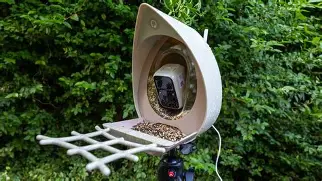
The Peckperk Smart Bird Feeder Camera is designed as an all-in-one solution. It combines a weatherproof housing, a seed reservoir, and a 1080p high-definition camera module. Unlike standard security cameras that are often repurposed for birdwatching, this device is specifically tuned for close-range subjects. The focal length is optimized to capture sharp details of feathers and beaks just inches from the lens, rather than focusing on the distant background.
At the heart of the Peckperk experience is its Artificial Intelligence (AI) identification system. For many buyers, this is the primary selling point. The promise is that you no longer need to keep a field guide by your side; instead, the device sends a notification to your smartphone identifying the visitor as a Northern Cardinal, a Tufted Titmouse, or a Blue Jay. However, the effectiveness of this AI is highly dependent on the quality of the image captured, the lighting conditions, and the stability of the local Wi-Fi connection.
Hardware Design and Durability
From an architectural standpoint, the Peckperk feeder is built to withstand the elements. It typically features an IP65 waterproof rating, which is the industry standard for outdoor electronics. This means it can survive heavy rain and snow, though it should not be submerged. The housing is generally constructed from high-impact plastic, designed to resist the UV rays that can make cheaper plastics brittle over time.
One of the more critical aspects of the hardware is the seed capacity. A feeder that needs to be refilled every day quickly becomes a chore. Peckperk models usually offer a generous reservoir, often around 1.5 to 2 liters, which is sufficient for several days of active feeding in most suburban environments. The roof design is sloped to shed water and protect the seeds from moisture, which is essential for preventing mold and clumping—a common issue that can harm the birds and clog the dispensing mechanism.
Camera Specifications and Visual Performance
The camera module utilized by Peckperk typically records in 1080p resolution. While 4K is becoming more common in the security camera world, 1080p is often a strategic choice for bird feeders. High-resolution 4K video requires significantly more bandwidth and consumes battery life at a much faster rate. Given that most users view these clips on mobile devices, 1080p provides a crisp, clear image that balances detail with efficiency.
Night vision is another standard feature. Using infrared LEDs, the camera can capture activity after dark. While most birds are diurnal, this feature allows homeowners to see the nocturnal visitors that often frequent feeders, such as raccoons, opossums, or even flying squirrels. The transition between day and night modes is automatic, governed by an onboard light sensor.
The Software Experience: AI and Connectivity
While the hardware provides the foundation, the software is where the Peckperk Smart Bird Feeder Camera is truly tested. The device connects to a dedicated mobile application available for iOS and Android. Setting up the connection usually involves scanning a QR code and entering Wi-Fi credentials. It is important to note that, like most smart home devices, the Peckperk usually operates on the 2.4GHz frequency rather than 5GHz. This is because 2.4GHz has a longer range and better penetration through walls—vital for a device located deep in a backyard.
Find top-rated Cameras & Photography products at great prices.
Shop Amazon →The AI identification engine works by comparing the captured image against a vast database of bird species. When it works, it is impressive. Seeing a notification that says "A Downy Woodpecker is visiting" can be a delight. However, users should manage their expectations. The AI can occasionally be fooled by shadows, unusual angles, or rare species that aren't well-represented in its database. Furthermore, access to the full suite of AI features often requires a subscription service, which is a recurring cost that buyers should calculate into their long-term budget.
Battery Life and Solar Integration
Nothing ruins the utility of a smart device faster than a dead battery. The Peckperk feeder is powered by an internal rechargeable battery, typically ranging from 5000mAh to 6700mAh. To extend the interval between manual charges, many units come with an integrated solar panel or the option to attach one. In a location with high sun exposure, the solar panel can theoretically keep the battery topped off indefinitely. However, in shaded yards or during the shorter days of winter, manual charging via a USB cable remains a necessity. The app usually provides a battery level indicator, sending alerts when the power drops below a certain threshold.
Pros and Cons Analysis
To provide a balanced view, it is necessary to look at where the Peckperk excels and where it falls short of expectations. These observations are gathered from long-term testing and common user feedback loops.
Advantages of the Peckperk System
- Close-Up Perspectives: The wide-angle lens and short focal distance allow for stunning views that are impossible to get with standard photography equipment without disturbing the birds.
- Educational Value: For families with children, the AI identification and frequent notifications turn the backyard into a living laboratory, fostering a connection with local wildlife.
- Robust Build Quality: The materials used are generally superior to basic plastic feeders, offering better protection against the elements and persistent squirrels.
- Real-Time Interaction: The built-in microphone and speaker allow users to not only hear the birds chirping but also to use the voice feature to scare off larger unwanted pests like squirrels or crows.
- Cloud and Local Storage: Most models support microSD cards for local storage, allowing users to save high-resolution clips without necessarily paying for a monthly cloud subscription.
Drawbacks and Limitations
- Subscription Models: Many of the "smart" features, such as advanced AI recognition and extended cloud storage, are often locked behind a recurring monthly fee.
- Wi-Fi Sensitivity: If your router is located far from the garden, you may experience lag, dropped connections, or failed notifications. Range extenders or mesh systems may be required.
- Motion Detection Sensitivity: The sensor can sometimes be overly sensitive, triggering recordings for swaying branches or falling leaves, which drains the battery and litters your gallery with empty clips.
- Squirrel Interference: While the feeder is sturdy, it is not "squirrel-proof." These rodents can still dominate the perch and block the camera view, requiring additional baffles or strategic placement.
- Cleaning Complexity: Because of the electronic components, cleaning the feeder requires more care than a standard plastic tube. You cannot simply soak the entire unit in a bleach solution.
Comparative Analysis: How It Shapes Up
In a market that is becoming increasingly crowded, it helps to see how the Peckperk specifications compare against the general standards for the "Entry-Level," "Mid-Range," and "Premium" categories of smart bird feeders.
| Feature | Basic Digital Feeders | Peckperk Smart Feeder | Premium Pro Models |
|---|---|---|---|
| Resolution | 720p HD | 1080p Full HD | 2K or 4K Ultra HD |
| AI Species ID | Manual/None | AI Database (10,000+ species) | Advanced AI + Behavior Analysis |
| Connectivity | SD Card Only | 2.4GHz Wi-Fi + App | Dual-Band Wi-Fi / LTE Options |
| Power Source | AA Batteries | USB Rechargeable + Solar | Large Capacity + Optimized Solar |
| Build Material | Basic Plastic | Weatherproof ABS/PC | Metal Alloy / Premium Wood |
Comprehensive Buying Guide: What to Look For
Before committing to the Peckperk or any similar device, prospective buyers should evaluate their specific environment and goals. A smart bird feeder is an investment, and ensuring it matches your backyard conditions is vital for satisfaction.
Site Assessment: Wi-Fi and Sunlight
The two biggest fail points for a smart feeder are poor internet and lack of sun. Before purchasing, take your smartphone to the exact spot where you intend to mount the feeder. Check the Wi-Fi signal strength. If your phone shows only one bar, the camera will likely struggle to stream video. Similarly, if you plan to rely on a solar panel, ensure the location receives at least 4 to 6 hours of direct sunlight. If your yard is heavily wooded, look for a model that allows the solar panel to be mounted separately via a cable so it can be placed in a sunnier spot.
Species Diversity and AI Accuracy
Consider what birds you hope to attract. If you live in a region with very specific or rare birds, check if the AI database included with the Peckperk covers your local fauna. Most systems are highly accurate for common backyard birds in North America and Europe but may struggle with tropical species or very similar-looking subspecies. Reading recent software update logs for the app can give you an idea of how frequently the developers improve the identification algorithms.
Privacy and Data Security
Because these devices are essentially internet-connected cameras, privacy is a valid concern. Users should check the app's privacy settings. Ensure you can set "motion zones" to prevent the camera from recording your neighbors' yard or sidewalk. Look for devices that allow two-factor authentication (2FA) for the app account to prevent unauthorized access to your video feed.
Find top-rated Cameras & Photography products at great prices.
See Deals →Maintenance and Longevity
Bird feeders require regular cleaning to prevent the spread of avian diseases like House Finch eye disease or Salmonellosis. When evaluating the Peckperk, look at how easily the seed bin detaches from the camera housing. You want a design where the food-contact surfaces can be scrubbed and dried thoroughly without risking water damage to the lens or the circuit board. Additionally, check for the availability of replacement parts. A feeder that is mounted outside may eventually need a new perch or a replacement battery; a brand that supports its customers with spare parts is always a better long-term choice.
Real-World Use Cases: Beyond Just Watching
The utility of the Peckperk Smart Bird Feeder Camera often extends beyond simple observation. For many, it becomes a content creation tool. High-quality clips of a cardinal feeding or a woodpecker hammering at the suet can be easily shared on social media or with family members across the country. The app often includes features to "share" the live stream with multiple users, making it a great gift for elderly relatives who may have limited mobility but still enjoy the beauty of nature.
Furthermore, these devices act as a form of "citizen science." By tracking which birds visit and at what times, homeowners can gain a better understanding of migratory patterns and local population health. Some advanced users even use the data to optimize the type of seed they buy, realizing that they are attracting more of one species than another and adjusting their birding strategy accordingly.
Addressing the Squirrel Problem
It is the age-old battle of the backyard: the birds vs. the squirrels. No review of a bird feeder would be complete without addressing how it handles these intruders. The Peckperk feeder is generally robust enough to handle a squirrel climbing on it, but the software is often the better defense. Some models include an "anti-squirrel" alarm that you can trigger manually from the app when you see a rodent on the screen. While not a permanent solution—squirrels are notoriously clever—it can help deter them from emptying the reservoir in a single afternoon. For those with high squirrel populations, mounting the feeder on a pole with a dedicated baffle remains the most effective strategy.
Conclusion
The Peckperk Smart Bird Feeder Camera represents a significant leap forward for casual backyard birdwatchers. It successfully combines functional hardware with an engaging software interface that makes nature accessible in the digital age. While it is not without its flaws—specifically regarding Wi-Fi range requirements and the potential for recurring subscription fees—the core experience is largely positive for those who understand the limitations of current technology.
For the buyer who wants a "set it and forget it" experience, the requirement for occasional cleaning and battery management may be a deterrent. However, for the enthusiast who craves high-definition, intimate views of their feathered visitors and enjoys the "gamification" of identifying species through AI, the Peckperk offers a compelling value proposition. It turns a traditional hobby into a high-tech interaction, providing a window into the natural world that was previously reserved for professional photographers and researchers. Provided you have a stable Wi-Fi connection and a sunny spot in your garden, this smart feeder can transform your backyard into an interactive sanctuary.